




Buyer Education
How Disposable Vapes Are Made – Inside the WASPE, Bang and RandM Fumot Factory
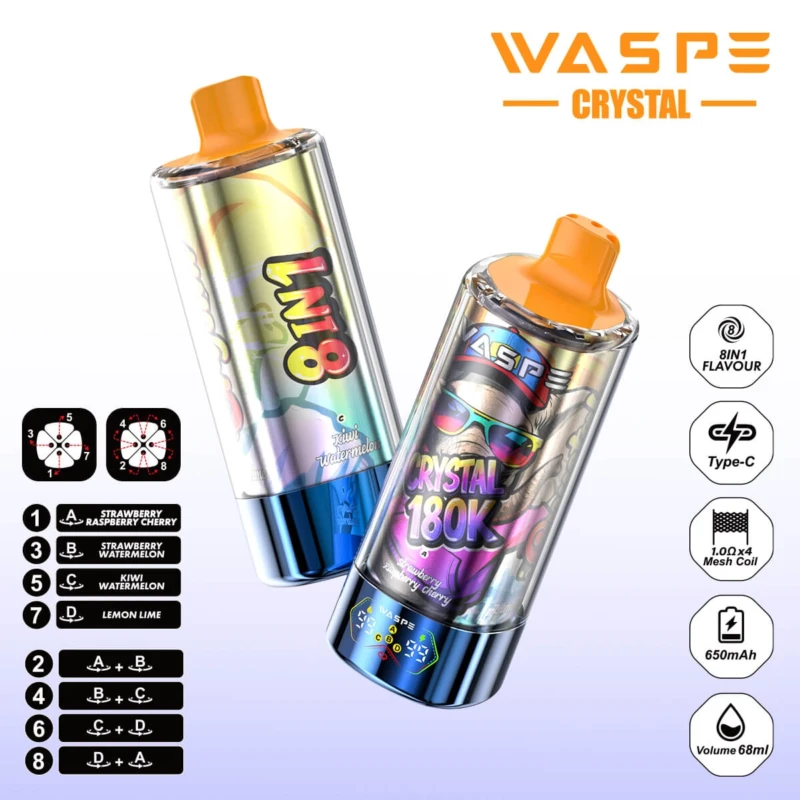
How Disposable Vapes Are Made: Inside the Factory (WASPE, Bang, RandM)
Understanding how disposable vapes are made gives wholesale buyers a meaningful advantage. When you know what separates a well-manufactured device from a poorly made one, you can ask better questions, evaluate suppliers more accurately, and make buying decisions with genuine technical confidence. This guide takes you through the full manufacturing process — from raw materials to finished product — with reference to the production standards used by leading brands including WASPE, Bang, and RandM Fumot.
Stage 1: Component Design and Engineering
Every disposable vape begins as an engineering brief. Manufacturers define the target puff count, e-liquid capacity, battery size, coil type, and feature set — LED display, flavour switching, mode selection — before a single component is produced.
This design phase is where the quality gap between premium and low-grade devices is first established. Brands like WASPE invest significantly in engineering specification — particularly around coil design, where the decision to use dual mesh rather than single mesh or wire coil has a direct and measurable impact on final product performance.
Key engineering decisions made at this stage include:
- Coil architecture — wire coil, single mesh, or dual mesh
- E-liquid reservoir design — capacity, wicking material, and anti-leak engineering
- Battery cell specification — capacity (mAh), discharge rate, and cycle life
- Housing design — ergonomics, material grade, port reinforcement, and assembly tolerances
- Display integration — LED type, sensor accuracy, and display programming
For ultra-high puff devices — the 40K, 100K, and 150K tier products from WASPE, Bang, and RandM Fumot — engineering complexity is substantially higher than for basic 10K devices. Battery management circuits, multi-chamber e-liquid systems, and flavour switching mechanisms each require dedicated engineering solutions.
Stage 2: Coil Manufacturing
The coil is the heart of the device. Its quality determines vapour production, flavour accuracy, and consistency across the device's full puff count lifecycle. This makes coil manufacturing one of the most technically demanding stages in the production process.
Wire coil production involves winding resistance wire — typically Kanthal or nichrome — around a mandrel to create the heating element. Cotton wicking is then threaded through the coil. This process is relatively straightforward and inexpensive, but the resulting small heating surface limits performance at high puff counts.
Mesh coil production involves cutting or stamping flat metal sheets into a perforated mesh pattern, then forming them into a cylindrical heating element. The mesh is precisely calibrated for resistance value, ensuring consistent heat output across units. Cotton wicking is applied to the outer surface of the mesh.
Dual mesh coil production — used by WASPE across its product range — involves assembling two mesh elements in a parallel configuration within a single coil housing. The manufacturing tolerance requirements are tighter, and the assembly process is more complex. However, the performance advantages at high puff counts justify the additional production cost.
Coil manufacturing in top-tier factories takes place in cleanroom or near-cleanroom conditions. Contamination from dust, oils, or foreign particles in the wicking material can affect flavour quality and consumer health — reputable manufacturers apply strict environmental controls at this stage.
Stage 3: E-Liquid Production and Filling
E-liquid formulation is both a science and a craft. The base components — propylene glycol (PG), vegetable glycerin (VG), nicotine, and flavouring concentrates — must be combined in precise ratios to achieve the intended viscosity, throat hit, vapour density, and flavour profile.
The formulation process involves:
- Sourcing pharmaceutical-grade PG, VG, and nicotine from certified suppliers
- Combining base ingredients in controlled ratios — typically 50:50 to 70:30 VG:PG for disposable vapes
- Adding EU-approved flavouring concentrates at calibrated concentrations
- Quality-checking nicotine concentration — critical for EU TPD compliance at the 20 mg/ml maximum
- Homogenising the mixture under controlled temperature and agitation
For brands operating at scale — Bang, WASPE, and RandM Fumot all produce millions of units annually — e-liquid production happens in dedicated manufacturing facilities with automated dispensing and in-line quality monitoring. Batch records are maintained for every production run, enabling traceability if a quality issue is identified post-production.
Filling is an automated process in modern factories. Devices pass through filling stations where calibrated pumps inject precise volumes of e-liquid into the reservoir. Overfilling causes leakage; underfilling reduces puff count delivery. Premium manufacturers use gravimetric (weight-based) filling verification to confirm every unit receives the correct volume.
Stage 4: Battery Integration and Electronics Assembly
The battery and electronics assembly stage brings the device's functional components together. For rechargeable disposables — now the standard for any device above 10K puffs — this includes:
- Battery cell installation: High-capacity lithium polymer (LiPo) cells are inserted into the housing. Cell quality directly affects charge cycle performance and safety. Premium brands source cells from certified suppliers with documented safety testing.
- Battery management circuit (BMS) integration: The BMS controls charge rate, prevents overcharging, manages discharge cutoff, and protects against short circuits. A well-engineered BMS is essential for consumer safety and device longevity.
- LED display integration: For display models — including all current WASPE and UZY Crystal devices — the display module, sensors, and control circuitry are connected and calibrated. Display accuracy is verified against actual battery and liquid levels.
- Flavour switching mechanism assembly: Multi-flavour devices require additional mechanical and electronic components — switching buttons, e-liquid channel selectors, and corresponding firmware programming.
Electronics assembly in reputable factories uses automated pick-and-place machinery and soldering processes that minimise human error. Each assembled unit undergoes functional testing before proceeding to the final assembly stage.
Stage 5: Final Assembly and Quality Control
Final assembly brings all components together — coil module, e-liquid reservoir, battery and electronics, housing, and mouthpiece. In premium manufacturing facilities, assembly line workers follow documented standard operating procedures and assembly jigs ensure consistent component alignment.
Quality control at this stage includes:
- Draw resistance testing — each unit is tested for correct airflow resistance
- Puff activation verification — the automatic draw sensor is tested for consistent activation
- LED display function check — display accuracy against known battery and liquid states
- Leak testing — units are checked for e-liquid leakage around seals and ports
- Visual inspection — casing, mouthpiece, labelling, and port integrity are checked against quality standards
For brands supplying the EU market — including WASPE, Bang, and RandM Fumot — quality control processes must also address regulatory compliance. This includes random batch sampling for Certificate of Analysis (COA) testing at accredited external laboratories, confirming nicotine concentration, ingredient compliance, and emission testing.
Stage 6: Packaging and Compliance Labelling
The final production stage prepares units for market. Packaging for EU-destined products must include:
- Health warnings in the correct language for each target market, covering at least 30% of packaging surface
- Full ingredient and emission information
- Batch number and manufacturing date for traceability
- Brand authentication codes — scratch-off or holographic labels for consumer verification
- Correct TPD notification references
Brands like WASPE and RandM Fumot maintain market-specific packaging variants for major European markets — separate packaging runs for UK, German, French, and Spanish-language requirements. This is a production complexity that smaller or grey-market manufacturers often bypass — a useful indicator of brand legitimacy when evaluating suppliers.
What This Means for Wholesale Buyers
Understanding the manufacturing process directly improves your buying decisions. When evaluating a wholesale supplier or a new product, you can now ask informed questions:
- What coil type is used — wire, single mesh, or dual mesh?
- What is the battery cell specification and BMS certification?
- Where is e-liquid produced and what third-party COA testing is conducted?
- What QC processes govern final assembly and leak testing?
- Are market-specific packaging variants produced for each EU country?
A supplier who can answer these questions specifically and with documentation is a supplier whose products are worth stocking. A supplier who responds vaguely or avoids the questions is one whose products carry unnecessary risk.
Final Verdict
Knowing how disposable vapes are made transforms you from a passive buyer into an informed sourcing professional. The manufacturing quality gap between premium brands — WASPE, Bang, RandM Fumot — and lower-grade alternatives is real, traceable, and directly consequential for retail performance. Build manufacturing standards into your supplier evaluation criteria and your wholesale catalogue will reflect it.
Browse our full range of factory-verified, EU-compliant disposable vapes or request a wholesale quote with full production documentation today.